


Hey there! As a supplier of Track Loader Compacts, I often get asked about the hydraulic pump capacity of these machines. It's a crucial factor that affects the performance and efficiency of a track loader compact, so I'm here to break it down for you.
First off, let's understand what hydraulic pump capacity means. In simple terms, it refers to the volume of hydraulic fluid that a pump can deliver within a specific time frame, usually measured in gallons per minute (GPM) or liters per minute (LPM). This capacity determines how quickly the hydraulic system can operate various functions of the track loader compact, such as lifting, tilting, and steering.
The hydraulic pump capacity of a track loader compact can vary significantly depending on several factors. One of the main factors is the size and model of the machine. Smaller track loader compacts typically have lower hydraulic pump capacities compared to larger ones. This is because smaller machines are designed for lighter tasks and don't require as much hydraulic power.

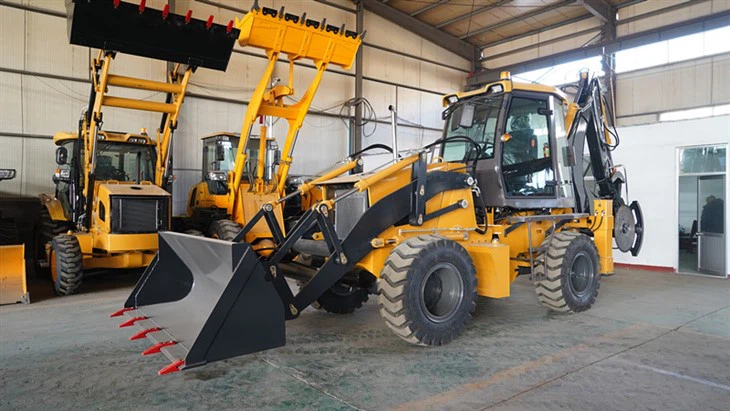
For example, a compact track loader used for residential landscaping or small construction projects might have a hydraulic pump capacity ranging from 10 to 20 GPM. On the other hand, a larger track loader compact used for heavy-duty construction or industrial applications could have a capacity of 30 GPM or more.
Another factor that affects hydraulic pump capacity is the type of hydraulic system used in the track loader compact. There are two main types of hydraulic systems: open-center and closed-center systems.
Open-center systems are more common in smaller track loader compacts. In an open-center system, the hydraulic fluid flows continuously through the system when the machine is running, even when no hydraulic functions are being used. This means that the pump is constantly working, but at a relatively low pressure. As a result, open-center systems generally have lower hydraulic pump capacities.
Closed-center systems, on the other hand, are more efficient and are often used in larger track loader compacts. In a closed-center system, the hydraulic fluid only flows when a hydraulic function is activated. This allows the pump to operate at a higher pressure and deliver more fluid when needed, resulting in a higher hydraulic pump capacity.
The hydraulic pump capacity also plays a crucial role in determining the performance of the track loader compact. A higher capacity pump can provide faster and more powerful operation of the hydraulic functions. For instance, a track loader compact with a high-capacity pump can lift heavier loads more quickly and tilt attachments more rapidly.
Moreover, a sufficient hydraulic pump capacity is essential for ensuring smooth and precise control of the machine. It allows the operator to make accurate movements, which is especially important when working in tight spaces or performing delicate tasks.
Now, let's talk about how the hydraulic pump capacity relates to the overall efficiency of the track loader compact. A machine with an appropriate hydraulic pump capacity can operate more efficiently, reducing fuel consumption and wear and tear on the components.
If the hydraulic pump capacity is too low for the tasks the track loader compact is expected to perform, the machine may struggle to operate the hydraulic functions effectively. This can lead to slower operation, increased fuel consumption, and premature wear on the hydraulic system.
On the other hand, if the hydraulic pump capacity is too high, it can result in unnecessary energy consumption and increased operating costs. Therefore, it's important to choose a track loader compact with a hydraulic pump capacity that matches the specific requirements of your applications.
As a supplier, I offer a wide range of track loader compacts with different hydraulic pump capacities to meet the diverse needs of our customers. Whether you're looking for a small, lightweight machine for light-duty tasks or a heavy-duty loader for large-scale projects, we have the right solution for you.
If you're interested in learning more about our track loader compacts, you can check out some of our other products on our website. We have a Large Forklift Loader that is perfect for heavy lifting and material handling. Also, our Maximize Efficiency 3.5T Telescopic Tractor Loader offers excellent performance and versatility. And if you need a machine that can handle both front-end and backhoe operations, our Front End Loader With Backhoe is a great choice.
In conclusion, understanding the hydraulic pump capacity of a track loader compact is essential for making an informed decision when purchasing a machine. It affects the performance, efficiency, and overall functionality of the loader. If you have any questions or need further information about our track loader compacts or hydraulic pump capacities, don't hesitate to reach out to us. We're here to help you find the perfect machine for your needs and ensure that you get the most out of your investment.
References
- Hydraulic Systems Handbook, various industry sources
- Track Loader Compact Manufacturer's Manuals


