


Hey there! I'm from a large forklift loader supplier, and today I wanna chat about how to measure the mast's verticality of a large forklift loader. It's a crucial aspect that can significantly impact the performance and safety of these heavy - duty machines.
First off, why does the mast's verticality matter? Well, a forklift loader's mast is like the backbone of its lifting operation. If it's not vertical, it can lead to all sorts of problems. For instance, uneven lifting can cause the load to shift, increasing the risk of accidents. It can also put extra stress on the mast components, leading to premature wear and tear, and potentially costly repairs down the line.
Let's dive into the tools we can use to measure the mast's verticality. One of the most common tools is a plumb bob. It's a simple yet effective device. You just hang the plumb bob from the top of the mast. The plumb bob will align itself with the force of gravity, creating a perfectly vertical line. Then, you can use a measuring tape to check the distance between the plumb line and the mast at different points along its height. If the distances are consistent at multiple points, the mast is likely vertical. But if there are significant variations, it means the mast might be tilted.
Another handy tool is a laser level. Laser levels are great because they can project a straight, highly accurate vertical line. You set up the laser level near the forklift loader mast. Make sure it's properly calibrated and leveled itself. Then, project the laser line onto the mast. Use a ruler or a measuring device to measure the deviation of the mast from the laser line. This method is quicker and more precise than using a plumb bob, especially for larger masts.
Now, let's talk about the step - by - step process of measuring the mast's verticality.
Step 1: Preparation
Before you start measuring, make sure the forklift loader is parked on a flat and level surface. This is super important because if the ground is uneven, it can give you false readings. Also, ensure that the mast is in its lowest position. This will make it easier to access and measure.
Step 2: Select the Measuring Tool
As I mentioned earlier, you can choose between a plumb bob or a laser level. If you're in a situation where precision is key and you have access to a laser level, go for it. But if you're in a more basic setting and just need a quick check, a plumb bob will do the job.
Step 3: Take Measurements
If you're using a plumb bob, hang it from the top of the mast. Start by measuring the distance between the plumb line and the mast at the bottom. Then, move up the mast in regular intervals, say every foot or so, and take measurements at each point. Record these measurements carefully.
If you're using a laser level, set it up and project the laser line onto the mast. Measure the distance between the laser line and the mast at different heights. Again, record all the measurements.
Step 4: Analyze the Results
Once you have all the measurements, it's time to analyze them. Calculate the average deviation of the mast from the vertical line. If the average deviation is within the manufacturer's specified tolerance, the mast is considered to be in good vertical alignment. But if it exceeds the tolerance, you'll need to take corrective action.
Step 5: Corrective Action
If the mast is found to be out of vertical alignment, don't panic. There are usually adjustment mechanisms on the forklift loader that can be used to correct the tilt. These adjustments might involve tightening or loosening certain bolts or using shims to realign the mast. However, if you're not confident in making these adjustments yourself, it's best to call in a professional technician.
Now, I'd like to mention some of the great products we offer as a large forklift loader supplier. We have the All Electric Skid Steer. This machine is not only powerful but also environmentally friendly, as it runs on electricity. It's perfect for indoor operations where emissions need to be kept to a minimum.
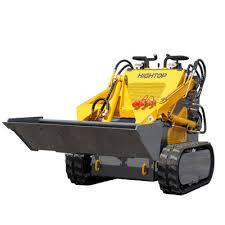
Our Mini Crawler Hydraulic Loader is another amazing option. It's highly maneuverable and can work in tight spaces. The hydraulic system provides smooth and efficient operation, making it a favorite among many customers.
And for those who need a heavy - duty machine, our Maximize Efficiency 3.5T Telescopic Tractor Loader is a top - notch choice. With its large lifting capacity and telescopic boom, it can handle a wide range of tasks with ease.
Measuring the mast's verticality is an important part of maintaining the safety and performance of your forklift loader. Whether you're a small business owner or a large industrial operator, ensuring that your equipment is in top condition is crucial.

If you're interested in our large forklift loaders or have any questions about measuring the mast's verticality or any other aspect of our products, don't hesitate to reach out. We're always here to help you make the right choice for your business needs.
References
- Forklift Maintenance Manuals
- Industrial Equipment Safety Guidelines
So, if you're in the market for a high - quality forklift loader or need more information about our products, just get in touch. We're eager to start a conversation and help you find the perfect equipment for your operations.


